Once the curtains closed on the Paris 2024 Olympic and Paralympic Games last year, some athletes found themselves facing an entirely different challenge: transitioning into life beyond elite sport. We spoke with three athletes - Sophie Christiansen, Meghan Musnicki and Tom Peribonio - who retired following the 2024 Games. Their stories highlight some of the highs and lows of life after sport, the challenges of finding a new purpose, and the crucial role of support systems in making the transition smoother.
Sophie Christiansen PLY: Owning the Transition
Sophie Christiansen, an eight-time Paralympic gold medalist in Para-Dressage, started riding at six because it was far more fun than physiotherapy. She quickly rose to prominence, winning bronze at her first Paralympic Games in Athens 2004 at 16 years old.
 While her athletic career was filled with extraordinary achievements, Sophie was well aware that her sport had an end date. "I always knew that my sport wouldn't last forever and I’d need something to fall back on, so that’s why I went to university and found a part-time job as a Software Engineer to do alongside my sport. It gave me a safety net knowing that I could retire at any time,” she explains.
“I wanted to retire on my terms. After 2016 I considered it, but it wasn’t my time. I got selected for Tokyo 2020, but didn’t end up competing because my horse had a veterinary issue. Then in Paris 2024, I wasn’t at a standard where I needed to be with my new horse and I didn’t make the team.” Missing the cut for Paris 2024 was a significant moment that triggered deep reflection. “When I wasn’t selected for Paris, I was pretty sure I wanted to retire,” she says. Her retirement came in layers. She took time off to experience life without sport and what things could look like without it. “I thought I might feel jealous watching my teammates compete, but actually, I felt glad not to be doing it,” she reveals.
As well as being immersed in her career outside of sport, Sophie believes that it’s important to have other things to focus on. She is channeling her energy into disability advocacy, particularly around championing accessible housing in the UK. Reflecting on her journey, she advises fellow athletes to plan early: "Think about your transition all the way through your career because, as we all know, anything can happen in sport."
Meghan Musnicki OLY: Finding a New Identity
Two-time Olympic rowing gold medalist, Meghan Musnicki, is no stranger to the trials of transition. Having represented Team USA in four Olympics, from London 2012 to Paris 2024, Meghan initially retired after Tokyo 2020, only to return to competition whilst balancing a corporate career.
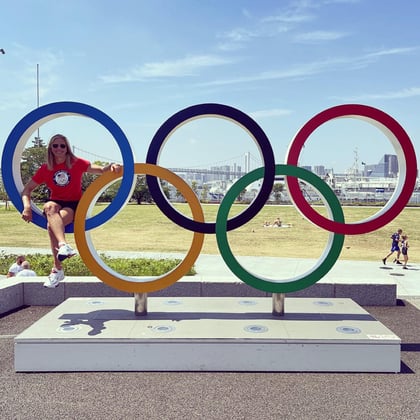 "I had been in sport since my freshman year of college, and trying to find a job with zero experience on my resume proved to be incredibly challenging,” Meghan shares. “Everybody says elite athletes are hireable and would make a great addition to any team, but you need organizations who understand the soft skills and intangibles you bring as an elite athlete and are willing to hire you without the experience.” Her job search was frustrating, filled with doubts: "I was thinking, am I ever going to find a job? Who's going to hire me?"
ACT Community played a crucial role in helping her navigate the unfamiliar terrain of job applications and interviews. "I’d never interviewed at a big company or negotiated details of a contract before, but ACT was with me every step of the way," she says. She successfully got a role as an Operations Specialist at global data center giant, Equinix, but it wasn’t long before sport called her back and she resumed training. “I told my supervisor that my career was the most important thing, but I wanted to see if I could do both,” she said. Equinix supported her comeback, with her supervisor even attending the Paris Games to cheer her on.
Retiring again after Paris, Meghan is now learning to embrace the new phase of her life. "Transitioning away from sport and learning what makes me tick, what I like to do, and what direction I want to take the next chapter of my life is hard. You wake up one day and it’s gone. It happens in an instant and I grieve the loss of my sports career because it is a big loss in my life,” she admits. “I didn't even know what I liked to do outside of rowing. You have to wrap your head around the fact that you are not going to be able to replicate the feeling of crossing the finish line first," she explains. However, she believes successful transition is not always clear-cut. "It's a highly personal experience and how you choose to handle it and deal with it is up to you and defined by you.”
Her advice to athletes is clear: “Don’t be afraid to ask for help. It’s not failing; it’s using your resources.”
Tomas Peribonio OLY: Closing the Chapter with Confidence
For Ecuadorian swimmer Tomas Peribonio, retirement has been a process of self-discovery. Having competed in Tokyo 2020, he initially stepped away from swimming after his first Olympic appearance. “I didn't swim for about ten months. Mentally, I didn't want to be in the pool and I didn't have the energy to do it. I started a job in finance and then the hard transition period hit me. I missed being an athlete, particularly the highs you get from sport, but this time I wanted to enjoy it with the people who helped me get me there. In Tokyo, I didn't get to do that because of COVID restrictions.”
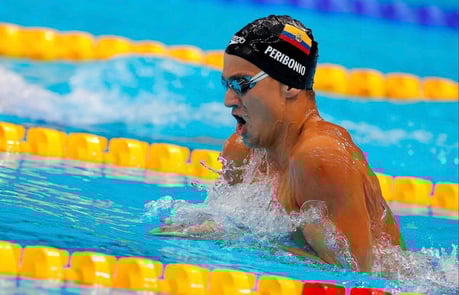 Tom decided to give it another go, returning with a new perspective. "The expectations I put on myself were completely different. It was about enjoying the journey with my family and coaches, and trying my best to make the team. It was a lot more rewarding than the first time," he reflects.
Post-Paris, Tom felt ready to move on. "Paris 2024 checked everything off the list for me: I’m content with where I am and happily retiring at this point,” he says. Transitioning into the business world, he secured a role at EY in the Business Transformation Consulting Practice, North Carolina with the support of ACT Community. “ACT got to know me as a person first and took the time to understand what my career and transition goals were, then they fit the pieces around me rather than the other way around.”
He has found the opportunity to leverage his skills developed as an athlete. “I’m approaching the business world the same way I did my second Olympic cycle, in that I'm setting goals a lot more maturely,” he explains. “I know that outside my role I need to be mentally happy: you have to take care of yourself as a whole package in order to be the best you can be at your job.” This approach is working as he finds new purpose in his second career, reigniting the same drive that fuelled him when he was training for the Olympics.
Tom’s advice for other athletes during retirement is to “talk about what you are thinking about, what scares you, and why aren't you committing to it. The power of networking is so important, not only during this transition time, but the rest of your life.”
Lessons from the Journey
Retiring from elite sport is a deeply personal process, filled with emotional highs and lows. From Sophie’s emphasis on early preparation, to Meghan’s realization that transition is fluid, to Tom’s approach of rediscovering purpose, their stories highlight key lessons for athletes facing retirement:
- Plan Early: Think about life beyond sport well before the transition.
- Seek Support: Organizations like ACT Community can make a world of difference in navigating career transitions.
- Embrace Change: Retirement is not an end, but rather an opportunity to build a new identity.
- Leverage Skills from Sport: The discipline, resilience, and leadership cultivated as an athlete are invaluable in the corporate world.
As more athletes step away from the competitive arena post-Paris 2024, their journeys serve as inspiration for those preparing to take the next step. Transitioning out of sport is not a one-size-fits-all process, but with the right mindset, support, and opportunities, life after competition can be just as fulfilling as the pursuit of gold.